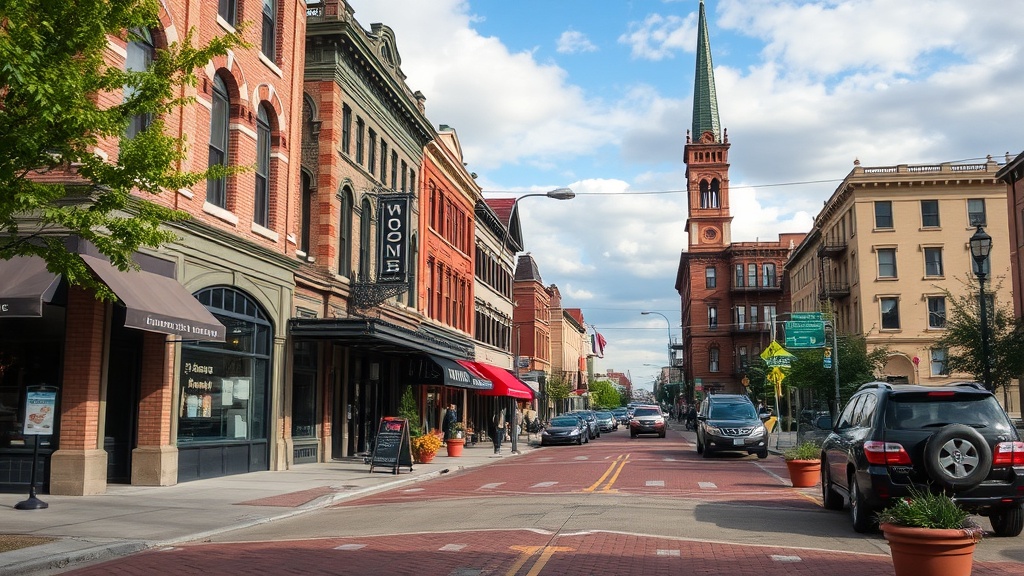
Exploring Old Strathcona: Edmonton's Historic Cultural Heart

This post breaks down exactly what makes Old Strathcona Edmonton's most walkable historic district — from its brick-lined streets and century-old architecture to the independent shops, live music venues, and restaurants that keep locals coming back. Whether you're planning a day trip, scouting for a new neighborhood, or just tired of the same old Whyte Avenue routine, you'll find practical details here on where to go, what to skip, and how to actually experience the area like someone who lives here.
What is Old Strathcona and why is it famous?
Old Strathcona is a historic district straddling Whyte Avenue (82 Avenue) between 99 Street and 112 Street in south-central Edmonton. It earned National Historic Status in 2007 — one of only a handful of Alberta neighborhoods to do so — and draws roughly 3 million visitors annually.
The area takes its name from Lord Strathcona (Donald Smith), the Hudson's Bay Company executive who drove the last spike of the Canadian Pacific Railway. Unlike Edmonton's downtown core — which has been bulldozed and rebuilt multiple times — Old Strathcona kept much of its original brick commercial architecture from the 1890s through 1950s. The result? A district that actually feels old in a city that sometimes struggles with identity.
The Old Strathcona Business Association manages the area's marketing and events, including the Old Strathcona Farmers' Market (operating since 1983) and the annual Whyte Avenue Art Walk. But the real draw isn't institutional — it's the density of independent businesses you won't find in West Edmonton Mall or at Southgate Centre.
What are the best things to do in Old Strathcona?
The best experiences here cluster around three categories: food and drink, live entertainment, and simply walking the neighborhood. Skip the checklist tourism — this isn't a place for rushing.
Eating and Drinking
Dadeo Diner and Bar on Whyte Avenue serves New Orleans-style po' boys and gumbo that rivals anything in Calgary. The fried oyster sandwich — messy, hot, properly dressed — has been a local staple for over two decades. The space itself is narrow, loud, and unpretentious. (Don't expect white tablecloths. Do expect to wait 20 minutes on a Saturday night.)
For something quieter, Café Linnea on 99 Street operates out of a restored 1912 building and focuses on Nordic-influenced brunch. The smørrebrød — open-faced sandwiches on dense rye — are genuinely good, not just Instagram bait. The coffee comes from Transcend Coffee, an Edmonton roaster that started in Garneau before expanding across the city.
Beer drinkers have options. Black Dog Freehouse operates a rooftop patio that's arguably the best in the neighborhood — three stories up, overlooking the avenue, open until 2 AM. Varsity Tavern draws a younger crowd with cheaper pints and sports screens. The catch? The food is forgettable. Stick to drinks.
Live Music and Theatre
Old Strathcona contains the highest concentration of live music venues in Edmonton. The Starlite Room — housed in a 1925 former Masonic Temple — books indie rock, punk, and electronic acts. The sightlines are terrible. The sound is surprisingly decent. The floor shakes during bass-heavy sets. It's perfect.
The Princess Theatre on Whyte Avenue screens independent films and hosts the Edmonton International Film Festival each fall. The building dates to 1915 and retains its original facade — neon sign, terracotta details, the works. Downstairs, the Garneau Theatre (operated by Metro Cinema) shows arthouse films in a 1940s art deco space.
For theatre, The Walterdale Theatre produces community-driven plays in a converted fire hall. The productions vary in quality — some are excellent, others are amateur hour — but the space itself has character that the Citadel Theatre downtown can't match.
Walking the Neighborhood
The best way to experience Old Strathcona is on foot. Start at 104 Street and walk west along Whyte Avenue, then duck south into the residential blocks. The homes here — built mostly between 1900 and 1920 — display the architectural variety Edmonton once had: Queen Anne revival, Craftsman bungalows, four-square Dutch Colonial. Many have been converted to legal secondary suites, which explains why the neighborhood retains such a mixed demographic.
Here's the thing: the area changes block by block. West of 109 Street gets quieter, more residential. East of 104 Street gets busier, more commercial. The stretch between 104 and 106 — the "main drag" — is where most visitors cluster. Worth noting: the side streets reward exploration. There's a vintage clothing shop hidden down 83 Avenue, a record store in a basement on 105 Street, a plant shop operating out of what used to be a garage.
Where should you shop in Old Strathcona?
Shopping here means independent retailers — no chains, no franchises, no predictable inventory. The selection varies wildly by category.
| Category | Store | What You'll Find | Price Range |
|---|---|---|---|
| Vinyl Records | Blackbyrd Myoozik | New releases, used classics, local Edmonton bands | $15-$40 per LP |
| Vintage Clothing | Pluto Vintage | 1970s-1990s streetwear, denim, band tees | $25-$150 per piece |
| Books | Wee Book Inn | Used paperbacks, sci-fi/fantasy selection, trade-ins accepted | $3-$15 per book |
| Home Goods | Hazel & Co. | Candles, ceramics, apothecary items from Canadian makers | $12-$85 |
| Outdoor Gear | MEC (Mountain Equipment Co-op) | Climbing gear, camping equipment, cycling accessories | $20-$400+ |
That said, some shops are overrated. The souvenir stores near 104 Street sell generic "Edmonton" merchandise — the same stuff you'll find at the airport. Skip them. The boutiques further west — past 108 Street — tend to have better curation and fewer tourists.
Old Strathcona Antique Mall occupies a former warehouse on 103 Street and houses over 100 vendors. It's overwhelming. Give yourself at least an hour. The inventory rotates constantly — Art Deco lamps one week, mid-century teak furniture the next. Not everything is priced fairly. Bargaining is acceptable, even expected, on larger items.
When should you visit Old Strathcona?
Timing matters. The neighborhood transforms dramatically between seasons.
Summer (June-August): Peak season. The Old Strathcona Farmers' Market runs Saturdays 8 AM to 3 PM — local produce, baked goods, crafts, food trucks. Street performers occupy nearly every corner. Patios are packed. Parking is a nightmare. (Pro tip: park in the Garneau neighborhood and walk, or take the LRT to University Station and hike south.)
Fall (September-November): Shoulder season. The university students have returned, so Whyte Avenue gets rowdier on weekends. The Edmonton International Film Festival brings crowds in late September. Weather is unpredictable — snow by Halloween isn't unusual.
Winter (December-February): Quiet, occasionally desolate. Some businesses reduce hours. The Ice on Whyte festival runs for two weekends in January — ice carving competitions, slides, hot chocolate vendors. It's charming in a Canadian way. That said, bring warm boots. The wind tunnels down Whyte Avenue and cuts through anything less than a proper winter coat.
Spring (March-May): Mud season. Melting snow reveals months of accumulated garbage. Patios start opening in late April, weather permitting. The university semester is winding down, so the student crowd thins out.
What should you know before moving to Old Strathcona?
Roughly 8,000 people call this neighborhood home. It's one of Edmonton's most expensive rental markets — expect to pay $1,400-$2,200 monthly for a one-bedroom apartment within the historic core. The catch? Many buildings lack modern amenities. No air conditioning. Street parking only. Thin walls. Original plumbing.
The City of Edmonton designates Old Strathcona as a "mature neighborhood," which restricts new development and preserves the historic character. That's great for aesthetics. It also means housing stock is old — pre-1950s in many cases — and maintenance issues are common.
Noise is a legitimate concern. Whyte Avenue's bars and music venues operate until 2 AM. Weekend crowds spill onto residential streets. If you're sensitive to noise, look at the Garneau neighborhood immediately south — still walkable, slightly quieter, slightly cheaper.
Transit access is excellent. The ETS bus system runs multiple routes through the area, and the future Valley Line LRT will include a stop at the neighborhood's southern edge. Most residents don't bother owning cars — groceries, entertainment, and work are all within walking distance or a short transit ride.
Schools are mixed. Old Scona Academic High School is academically selective and ranks among Alberta's top public schools. Strathcona High School serves the broader catchment. The University of Alberta's main campus sits immediately north — a 15-minute walk — which explains the high student population and the abundance of cheap eats.
"Old Strathcona isn't trying to be anything it's not. The neighborhood knows what it is — a little worn, a little weird, stubbornly independent — and that's exactly why people keep coming back."
The area won't appeal to everyone. If you want new construction, underground parking, and chain restaurants, look elsewhere — maybe Windermere or Summerside. But if you value character over convenience, if you'd rather browse a dusty record store than order from Amazon, if you think a neighborhood should feel like it belongs to the people who live there — Old Strathcona delivers. That hasn't changed in a hundred years. It's not about to start now.